Crayford's Industrial & Aviation Heritage: Vickers, Guns and Aeroplanes
Crayford grew as a factory town around the Vickers armaments works. Its public art still celebrates that industrial and aviation history.
Modern Crayford is best known for its shops, but the town owes its shape and much of its character to a single industry: armaments and, later, aircraft manufacturing.
The Maxim and Vickers works
In the late nineteenth century the Maxim Nordenfeldt Gun and Ammunition Company operated a major factory in Crayford. In 1897 it was taken over by Vickers, which grew into the dominant employer in the town. Vickers built military weapons and, in time, military aeroplanes at Crayford, and the company shaped the surrounding town — building homes, a theatre and a canteen for its workers close to the workshops.
From canteen to Town Hall
One legacy is hiding in plain sight. Crayford Town Hall began life as a canteen built for Vickers staff during the First World War, before later being converted for civic use — a direct link between the town's industrial past and its civic present.
Alcock and Brown
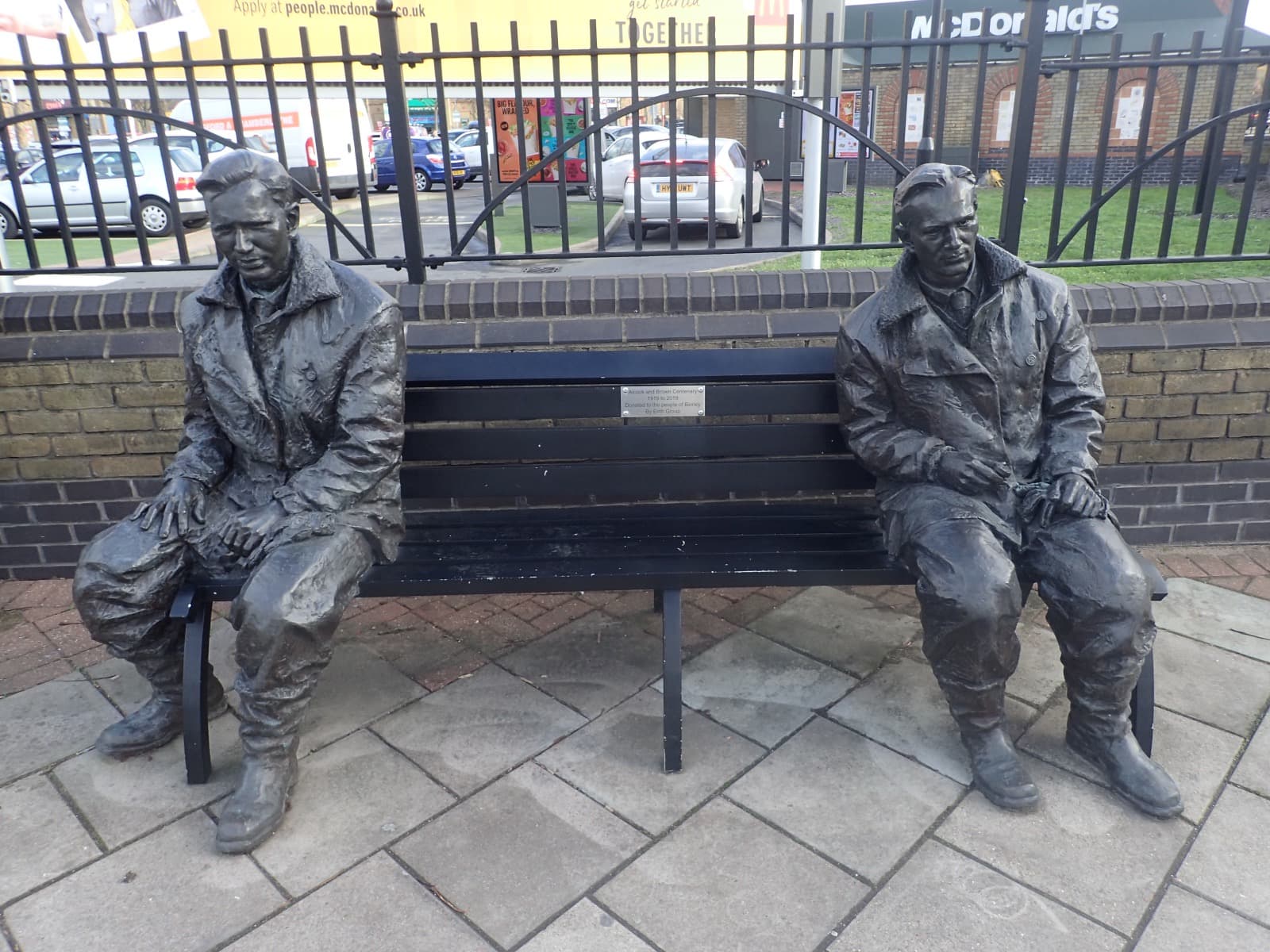
Crayford's aviation connection is commemorated by a sculpture of the aviators John Alcock and Arthur Brown, sited near where the Vickers factory once stood. Alcock and Brown made the first non-stop transatlantic flight in 1919 in a Vickers Vimy — and Crayford's memorial celebrates the town's place in that aviation story.
Public art around the town
The theme continues in newer public art. Sculptures by the artist Andy Scott — including works nicknamed Captain Crayford and Propella — stand in the town, their aviation motifs nodding to Crayford's history of building aeroplanes. Look out for them around the town centre and riverside.
Sources: Wikipedia (Crayford); Wikimedia Commons image documentation for the town's public sculptures.
Share this article